Jethro Tull — Music Videos
Play Jethro Tull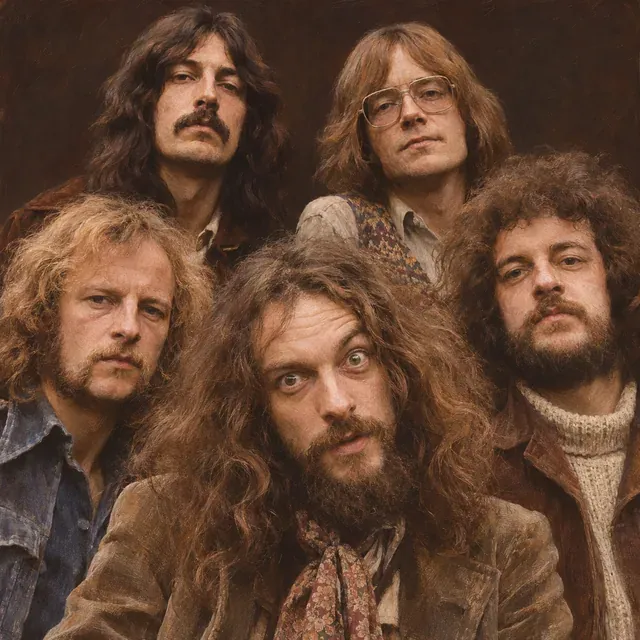
Flute, folk and electric rock
Jethro Tull developed a musical language in which Ian Anderson’s flute and singing could share the foreground with forceful electric guitar. Their recordings draw on blues, British folk and progressive rock, often moving between an intimate acoustic passage and a much larger ensemble sound. The flute serves as a lead instrument with its own rhythmic attack and phrasing, giving the group an identity that is immediately different from a conventional guitar-led rock band.
The Aqualung period
Aqualung and Locomotive Breath appear on the group’s 1971 album Aqualung. The title track combines a famous heavy guitar figure with quieter sections, while Locomotive Breath builds from a measured opening into an insistent full-band performance. The album’s songs examine social behaviour, belief and the position of people on the edges of society. These themes are carried by characterful performances and arrangements that leave room for sharp changes of mood.
Following the musical detail
Listen for Anderson’s breath, articulation and rhythmic emphasis on flute, and for the way the guitar answers or counters the vocal line. Jethro Tull can be direct and riff-driven, but their songs also make use of storytelling and carefully placed instrumental episodes. They offer a distinctive meeting point between the physical energy of hard rock and the narrative instincts of folk music.
Other Artists
Discover more voices we think you'll enjoy right now.

