Jazz: A Journey Through Sound and Time
Play Jazz playlist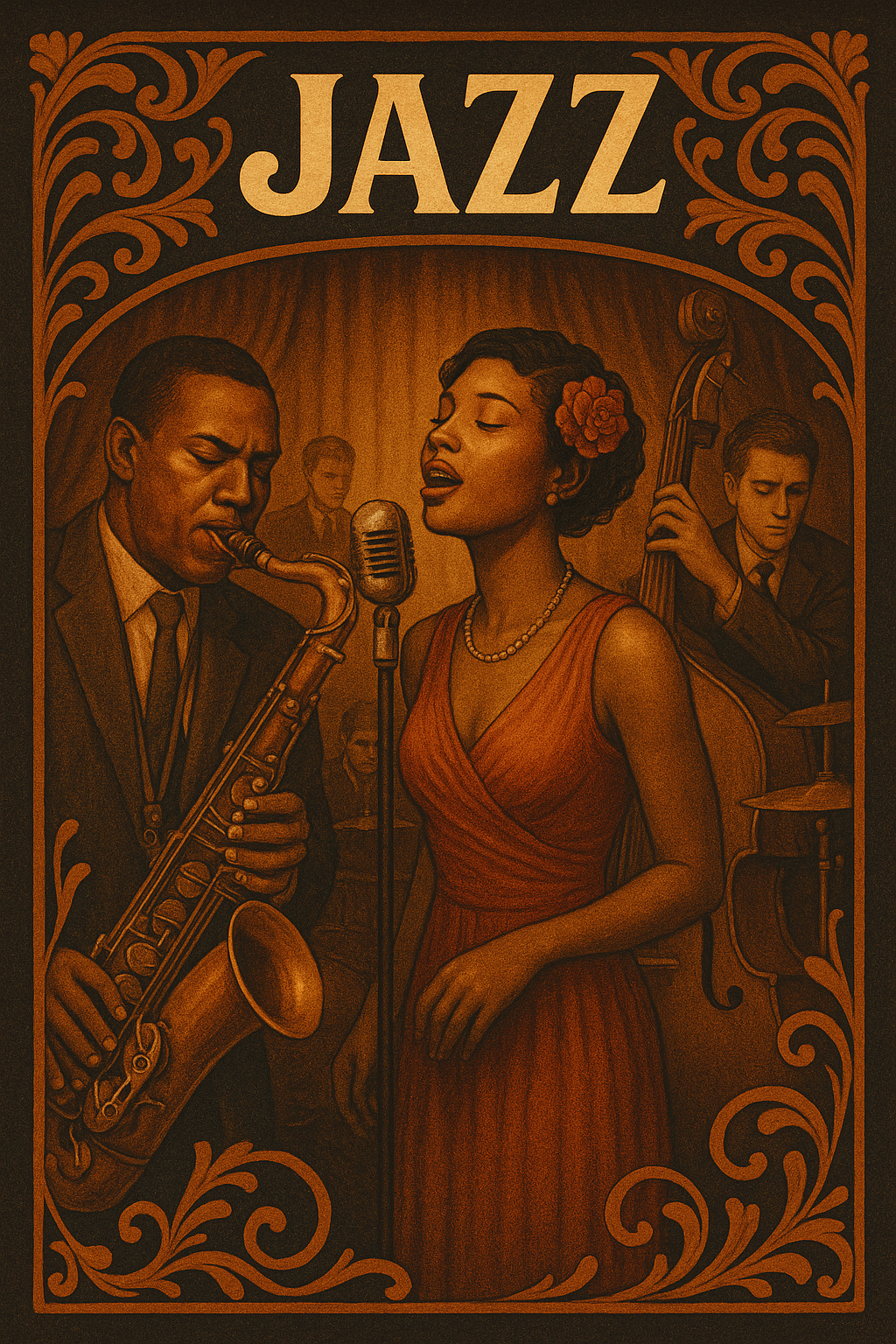
Jazz is more than just music; it's a cultural phenomenon that has captivated audiences for over a century. Known for its improvisation, unique rhythms, and expressive melodies, jazz is a genre that breaks boundaries and defies convention. Originating in the African American communities of New Orleans in the late 19th and early 20th centuries, jazz quickly spread across the United States and, eventually, the world.
The history of jazz is as dynamic as its sound. In its early days, jazz was deeply intertwined with the vibrant nightlife of cities like New Orleans, Chicago, and New York. It evolved through various styles, such as Dixieland, swing, bebop, and fusion, each adding new layers to its complexity. Legends like Louis Armstrong, Duke Ellington, and Charlie Parker were pivotal in shaping jazz, taking it to new heights of artistic expression.
Jazz is characterized by its syncopated rhythms, improvisational solos, and complex chord progressions. It's a genre that thrives on spontaneity, allowing musicians to express their individuality and emotions through their instruments. The cultural significance of jazz is immense, as it has played a crucial role in the social movements of the 20th century, providing a voice to the voiceless and challenging societal norms.
Today, jazz continues to inspire countless musicians across various genres. Its influence can be heard in modern pop, rock, R&B, and hip-hop, proving that jazz's legacy is enduring and ever-evolving. Whether you're a lifelong fan or a newcomer, exploring jazz offers a rich and rewarding experience that connects the past to the present and beyond.
Jazz: A Journey Through Sound and Time
Jazz is more than just music; it's a cultural phenomenon that has captivated audiences for over a century. Known for its improvisation, unique rhythms, and expressive melodies, jazz is a genre that breaks boundaries and defies convention. Originating in the African American communities of New Orleans in the late 19th and early 20th centuries, jazz quickly spread across the United States and, eventually, the world.
The history of jazz is as dynamic as its sound. In its early days, jazz was deeply intertwined with the vibrant nightlife of cities like New Orleans, Chicago, and New York. It evolved through various styles, such as Dixieland, swing, bebop, and fusion, each adding new layers to its complexity. Legends like Louis Armstrong, Duke Ellington, and Charlie Parker were pivotal in shaping jazz, taking it to new heights of artistic expression.
Jazz is characterized by its syncopated rhythms, improvisational solos, and complex chord progressions. It's a genre that thrives on spontaneity, allowing musicians to express their individuality and emotions through their instruments. The cultural significance of jazz is immense, as it has played a crucial role in the social movements of the 20th century, providing a voice to the voiceless and challenging societal norms.
Today, jazz continues to inspire countless musicians across various genres. Its influence can be heard in modern pop, rock, R&B, and hip-hop, proving that jazz's legacy is enduring and ever-evolving. Whether you're a lifelong fan or a newcomer, exploring jazz offers a rich and rewarding experience that connects the past to the present and beyond.