Post-Punk: Uncovering Its Influence and Legacy
Play Post-Punk playlist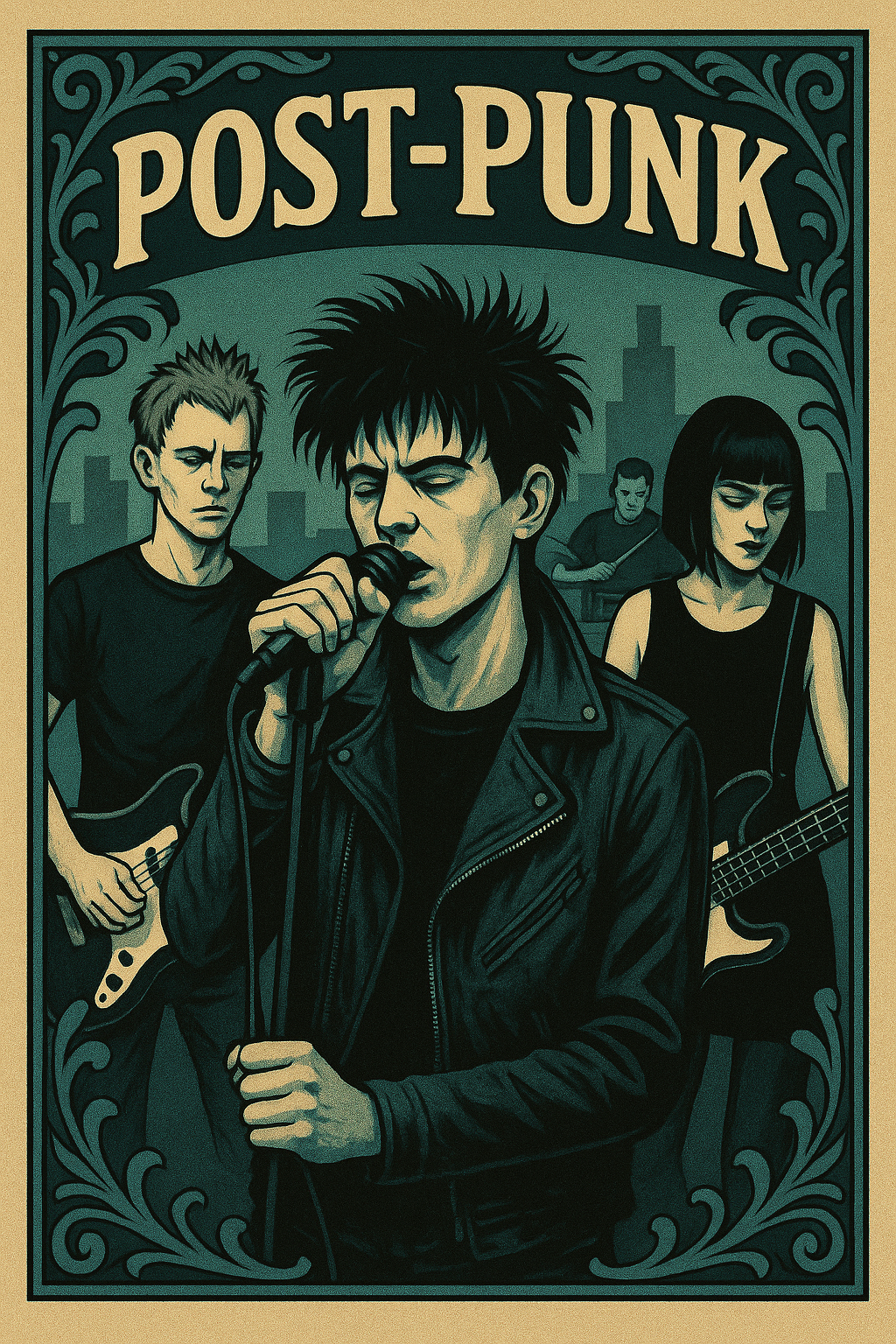
Post-Punk emerged in the late 1970s as a reaction to the raw simplicity of punk rock, aiming to expand musical boundaries and explore new artistic expressions. Known for its experimental sounds and eclectic influences, Post-Punk quickly became an influential force in the music world.
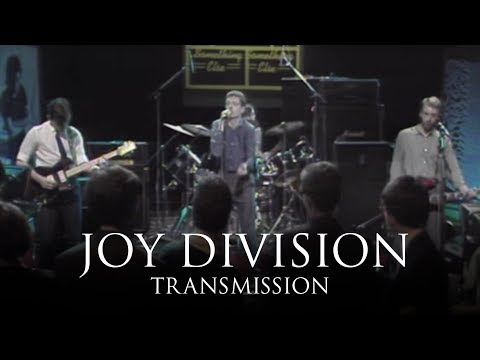
The genre's roots can be traced back to bands like Joy Division, Siouxsie and the Banshees, and Gang of Four, who sought to blend punk's rebellious spirit with a more sophisticated approach. As it evolved through the 1980s, Post-Punk embraced elements from various genres, including electronic, jazz, and funk, creating a diverse and innovative soundscape.
Characterized by its angular guitar riffs, complex rhythms, and introspective lyrics, Post-Punk also emphasized a moody aesthetic and a penchant for experimentation. Key artists such as The Cure, Talking Heads, and Bauhaus have left a lasting mark, influencing both their contemporaries and future generations of musicians.
The legacy of Post-Punk is evident in today's music, with many modern bands drawing inspiration from its pioneering sound. The genre's willingness to challenge norms and push creative boundaries continues to resonate, shaping the sonic landscape of alternative and indie music around the globe.