Music story
Women Writing 90s Rock: Voice, Authorship and Expectations
Compare PJ Harvey, Alanis Morissette and Dolores O’Riordan through three recordings that separate vocal character, songwriting choices and assumptions about autobiography.
Published November 20, 2026 · Updated November 21, 2026
3 sources & further readingJoin the conversation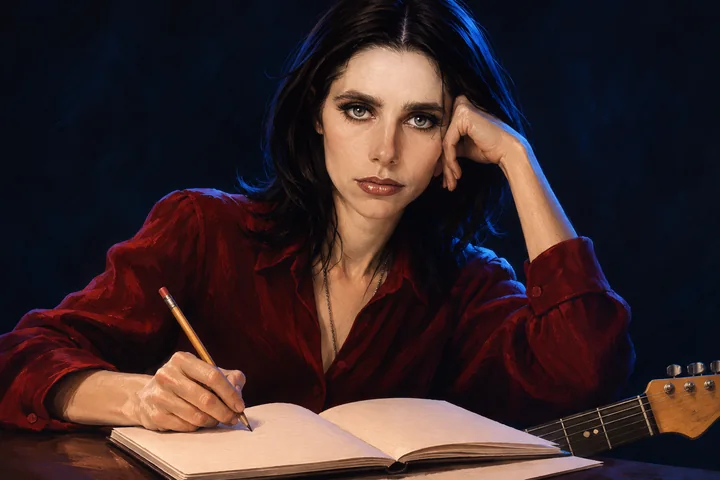
Listen here
Follow the narrator and recurring vocal fragments without assuming that the story is the writer’s biography.
Artists in this selection


In this story
Putting women in one rock category can hide the decisions that make their work different. Down by the Water, You Oughta Know and Zombie are useful companions because their voices do different jobs. One invites attention to an unsettling narrator, another makes an address feel immediate, and a third turns outward towards public violence. Start with those choices. The performer’s gender does not tell you the song’s subject, its truth status or how its sound was made.
PJ Harvey: distinguish the narrator from the writer
Harvey’s official discography places Down by the Water in 1995. Approach its voice as a character within a song. Who is speaking, what does the speaker reveal, and what remains disturbing or unexplained? A first-person performance can make a fictional situation convincing without presenting the songwriter’s own actions as a confession.
Follow the recurring vocal material alongside the main account. Ask how a repeated fragment changes your attention: does it clarify the situation, deepen its uncertainty or simply refuse to go away? You can describe that relationship without inventing a private event behind it. This is a useful starting point for hearing authorship as the construction of a perspective, rather than as a demand for biographical disclosure.
PJ Harvey · 1995
Follow the narrator and recurring vocal fragments without assuming that the story is the writer’s biography.
Song detailsAlanis Morissette: give the writing partnership its name
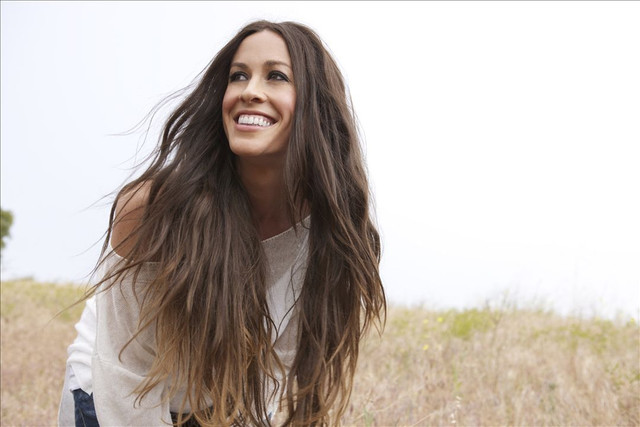
You Oughta Know is credited to Morissette and Glen Ballard in M Music & Musicians’ recording account. The account describes their writing demos becoming the basis of the released recording, with additional instrumental contributions. That history complicates an easy opposition between a spontaneous feeling and a constructed record: a performance can retain urgency while also being collaboratively arranged.
Listen to the address before trying to identify its real-life recipient. Notice where a line begins evenly and where its delivery presses harder against the accompaniment. Then compare the verses with the recurring section. Which details tell a particular story, and which feelings could another listener recognize without knowing any names? The writing and delivery supply enough to discuss without turning the song into celebrity detective work.
Alanis Morissette · 1995
Listen for shifts in address and vocal pressure; keep the documented Morissette–Ballard writing partnership in view.
Song detailsDolores O’Riordan: a voice directed towards the world
Zombie offers a different subject and a documented arrangement decision. In an original interview with Cranberries drummer Fergal Lawler, he recalls O’Riordan wanting more guitar distortion and harder drums. The song responded to the 1993 Warrington bombing. Here the writer’s intention concerns public violence, not a romantic breakup.
Follow how the vocal changes its emphasis between sections, then attend to the band around it. Does the accompaniment make the address feel more forceful, more exposed or both? Compare that relationship with the other two examples. Anger is a broad description; its target, its language and the musical setting give it a particular meaning. Those differences are part of the writing.
The Cranberries · 1994
Compare the force of the voice and band with Lawler’s account of O’Riordan requesting harder drums and more distortion.
Song detailsCompare decisions rather than a supposed common sound
These three examples do not establish a single way women sang or wrote rock in the 1990s. They show why the category needs to leave room for authorship, collaboration and different subjects. A powerful voice is not evidence of who wrote every part, and a writing credit does not explain every production choice. Use the documented credits where they exist and keep the roles distinct.
On a second pass, make three comparisons: the relationship between narrator and listener, the job of repetition, and the interaction between voice and accompaniment. You may hear vulnerability in a forceful passage or control in an apparently unstable one. Treat those as interpretations to test against the performance. They give each artist more room than an expectation that every woman’s song must explain her private life.
Sources & further reading
3 references
- PJ Harvey — Down by the Water official discography
Checked November 19, 2026
- You Oughta Know — M Music & Musicians recording account
Checked November 19, 2026
- Fergal Lawler — No Need to Argue original interview
Checked November 19, 2026
Comments (0)
What do you hear? Share a musical detail, a memory or a question. Keep it thoughtful and on topic.
Loading comments…