Music story
Why Hip-Hop Drum Sounds Feel Different
Compare Planet Rock, Shook Ones, Pt. II and Work It to separate a drum sound’s shape and texture from the rhythm it plays.

Listen here
Compare the length of the low drum with the sharper upper percussion; Baker documents the TR-808 connection.
Artists in this selection


In this story
A kick can land in the same place in a pattern and still change the whole feel of a track. Its beginning, its weight and the time it takes to fade are part of the sound. The placement of those hits is a different question. Planet Rock, Shook Ones, Pt. II and Work It offer a practical way to separate drum character from beat pattern, without pretending that one machine or one sample explains every hip-hop record.
Planet Rock: hear the character of a synthesized drum
In his Red Bull Music Academy lecture, Arthur Baker recalls choosing the Roland TR-808 while making Planet Rock. Roland’s account of the instrument’s design explains that its drum voices use analog synthesis rather than recordings of acoustic drums. Here the production connection is documented, rather than guessed from a familiar low-frequency sound.
Follow the low drum and then the sharper upper percussion. Notice how long each seems to remain after its initial impact. The beginning of a sound is often called its attack; its falling-away portion is its decay. Try to keep those shapes separate from where the hits occur. A short bright event and a longer low event can share one rhythm while leaving very different amounts of audible space.
Afrika Bambaataa & The Soulsonic Force
Compare the length of the low drum with the sharper upper percussion; Baker documents the TR-808 connection.
Song detailsShook Ones, Pt. II: a recorded drum loop has a history
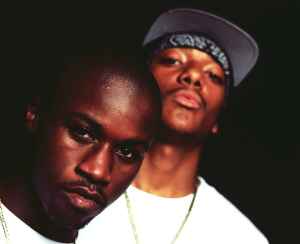
Havoc takes the production apart in Song Exploder. He describes finding the drum material on a record, capturing it with an MPC60 and using it to guide the music he built around it. This gives a concrete contrast with Planet Rock’s documented drum-machine choice. It does not mean that every sound in the Mobb Deep track comes from the same source.
Listen for the relationship between the main drum hits and the smaller sounds around them. Does the pattern feel like a set of isolated events or like a connected strip of activity? Follow the snare’s edge, then return to the low drum. You can describe a texture as dry, rough or ringing as a listening impression without claiming that you know which microphone, processing setting or room produced it.
Hear the connected texture of the drum material alongside Havoc’s account of sampling a loop and building around it.
Song detailsWork It: hear the voice inside the percussion
The Rock & Roll Hall of Fame’s Missy Elliott profile places Work It on Under Construction and describes her creative partnership with Timbaland. That history matters because a record’s beat is part of an arrangement made with the performer. It is not merely a neutral grid beneath a finished rap.
Follow a short passage by attending to the percussion first. Then bring Elliott’s delivery back into focus. Which vocal sounds feel percussive, and which drum events seem to answer a phrase? A sound can have a clear rhythmic role without resembling an acoustic kit. Comparing this with the other examples helps you hear drum character as part of the exchange between voice and backing, rather than as an equipment-identification puzzle.
Missy Elliott · 2002
Follow the exchange between Elliott’s vocal timing and the percussion without guessing an undocumented drum machine.
Song detailsChange one listening question at a time
Three useful questions are enough to begin: how sharply does a sound start, how long does it remain, and what surrounds it? Only after that, ask where it falls in the repeating pattern. This order prevents tempo, swing, volume and timbre from collapsing into one vague judgment that a beat sounds hard or soft.
Replay a passage at a comfortable, consistent volume and compare one sound across the selection. A larger playback level can make almost any drum seem more forceful, so resist using loudness as your only measure. The goal is a clearer description of each recording’s balance: short events, sustained low sounds, rough edges and spaces occupied by the voice. Those details explain more than assigning every example the same drum label.
Sources & further reading
4 references
- Arthur Baker — original Red Bull Music Academy lecture
Checked November 19, 2026
- Roland — official TR-808 engineering history
Checked November 19, 2026
- Havoc — original Song Exploder interview transcript
Checked November 19, 2026
- Missy Elliott — Rock & Roll Hall of Fame profile
Checked November 19, 2026
Comments (0)
What do you hear? Share a musical detail, a memory or a question. Keep it thoughtful and on topic.
Loading comments…