Music story
The Space Between Notes: Hear What a Song Leaves Open
Compare Prince, the Police and the Beatles to hear rests, sparse backing and the sounds that remain between musical attacks.
Published November 20, 2026 · Updated November 21, 2026
3 sources & further readingJoin the conversation
Listen here
Follow short attacks and the spaces around the vocal; official Prince music video.
Artists in this selection

In this story
A song can keep moving while some of its instruments leave room. That room may last less than a beat, sit around a singer’s phrase or extend through a deliberately sparse passage. Paying attention to it changes what you hear: an entrance has an edge because something preceded it, and a return can feel stronger because a sound has been withheld. These examples invite you to follow the gaps as closely as the notes.
A gap is not always complete silence
Dennis DeSantis’s Ableton chapter on silence and noise makes a useful distinction: a sparse texture may still contain ambience. A note can stop while its reverberation remains, or one instrument can rest while another continues. The absence of a fresh attack is different from a recording containing absolutely no sound.
Try listening at a comfortable, unchanged level. When the singer finishes a phrase, identify what remains: a drum pattern, a ringing chord, a quiet background layer or something harder to name. You do not have to solve the sound’s technical origin to notice its musical role. Avoid raising the volume simply to chase every faint detail; the larger pattern is the useful comparison here.
Prince: a full groove with fewer parts
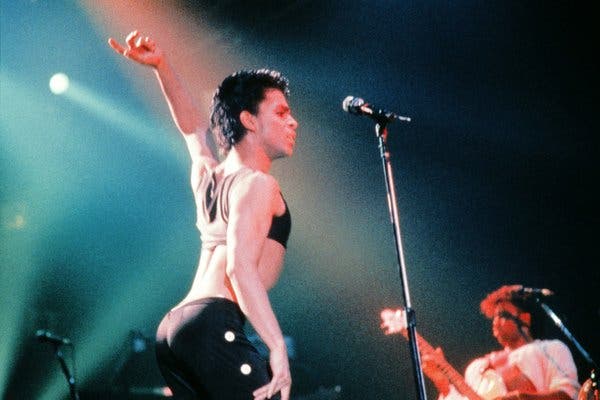
Play Kiss and follow the spaces around the vocal. David Z’s original production account in Mix recalls Prince stripping back the arrangement, including removing a bass part. The sparse result was a choice, rather than evidence that the song was waiting to be completed.
Now ask which sounds keep your sense of movement going. Listen for short attacks and for the voice entering against them. Instead of expecting a continuous blanket of accompaniment, follow how the parts define separate positions. A little room between gestures can make each gesture easier to recognize. The effect depends on the relationship between events, not simply on how many instruments appear in the credits.
Prince and the Revolution · 1986
Follow short attacks and the spaces around the vocal; official Prince music video.
Song detailsThe Police: count through the spaces
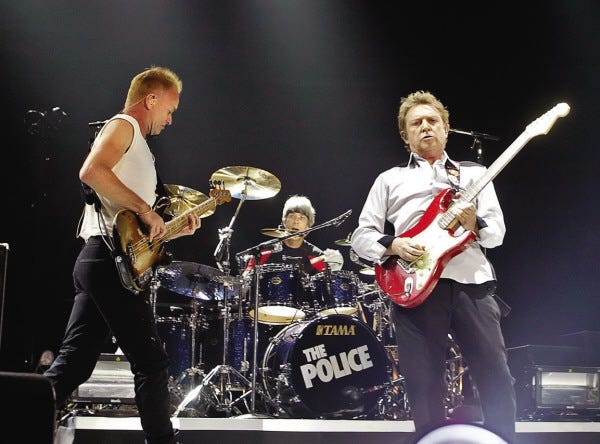
Roxanne offers another listening exercise. Pick out the guitar and keep a steady count while attention moves toward the singer. Where does the accompaniment mark the beat, and where does your internal pulse connect its gestures? Try continuing that count without tapping for a few phrases.
Then stop concentrating on the guitar and listen to the whole band. A part that seemed intermittent on its own may feel continuous within the ensemble’s movement. Space is shared between musicians: one part can leave an opening that another fills. The selected example is the Police’s official music video, not a later Sting rearrangement, so keep comparisons tied to this particular presentation.
The Police · 1978
Count through the guitar’s gestures, then listen to the whole band; the Police official music video.
Song detailsThe Beatles: follow the foreground and background
In Come Together, begin with the recurring low figure before attending to the vocal. Notice whether a short instrumental gesture holds your attention after it ends. Then ask what you can hear behind it. A listener can carry a remembered motif through the space between its appearances.
Compare this with Kiss without assuming they share a production method. Both can help you notice the difference between adding another layer and making the existing layers more distinct. You are comparing listening effects, not proposing that the Beatles used Prince’s later studio process. The selected official video illustrates the song; its visual storytelling does not document the recording session.
The Beatles · 1969
Remember the low recurring figure between its returns; official Beatles video, not session documentation.
Song detailsHear a return as part of the phrase
Andrea Stolpe’s Berklee discussion of contrast describes how a passage can change intensity through register, rhythm and harmonic activity. Turning the volume up is only one possible change. The same listening principle helps on a smaller scale: a voice or instrument can matter because of when it returns.
Replay one example and follow only entrances; replay it again and follow only endings. On the third pass, reconnect the two. What initially sounded like empty space may become part of a phrase’s shape. Explore more funk, new wave or classic rock with that question in mind.
Sources & further reading
3 references
- Silence and Noise — Dennis DeSantis / Ableton
Checked November 19, 2026
- Classic Tracks: Prince’s Kiss — Dan Daley / David Z, Mix
Checked November 19, 2026
- How to Write a Bridge to a Song — Andrea Stolpe / Berklee Online
Checked November 19, 2026
Comments (0)
What do you hear? Share a musical detail, a memory or a question. Keep it thoughtful and on topic.
Loading comments…