Music story
The Voice as an Instrument: Rhythm, Shape and Repetition
Hear Louis Armstrong, Cocteau Twins and Daft Punk through vocal sound: wordless phrases, changing syllable shapes and a short line made into a recurring figure.

Listen here
Continue beyond the opening to the wordless vocal exchange; historical third-party audio transfer, exact restoration/master not established.
Artists in this selection


In this story
A singer can tell a story, but a voice also has musical shape before you understand a sentence. It can produce a short attack, sustain a sound, move through a melody or repeat a compact rhythmic figure. Three recordings from different settings invite you to shift attention from verbal meaning toward those choices. They are different uses of a voice, not stages in one direct history of influence.
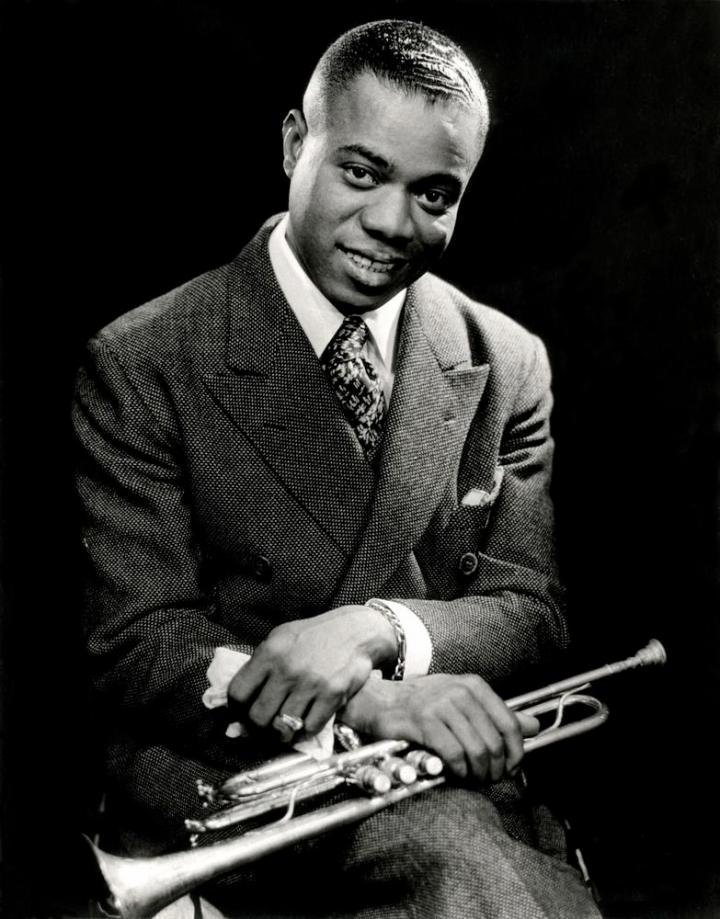
Louis Armstrong: follow a voice beside the instruments
The Smithsonian’s Armstrong education kit discusses scat singing through wordless phrases and includes West End Blues among its listening examples. Wordless singing can communicate musical direction without presenting a sequence of lyrical statements. Pitch, duration, articulation and the relationship to another part remain available to the performer.
Let West End Blues unfold beyond its trumpet opening and listen for the vocal passage. Compare the voice’s short gestures with the nearby instrumental lines. Does the singer seem to answer, support or move alongside another part? Try remembering the shape of a phrase rather than looking for a sentence within it.
This is an old recording heard through a third-party audio upload. Surface texture and transfer quality are part of this presentation; they do not tell us the exact equipment or restoration process. The uploader supplies little session documentation, so the example illustrates the musical exchange rather than establishing a definitive archival transfer.
Louis Armstrong · 1928
Continue beyond the opening to the wordless vocal exchange; historical third-party audio transfer, exact restoration/master not established.
Song detailsElizabeth Fraser: attend to the sound of syllables
Lorelei offers a different task. The Cocteau Twins official archive discusses Elizabeth Fraser’s inventive relationship with language and her preference for listeners attending to sound and emotion. That context is a reason to listen attentively, not a license to invent a translation for a particular song.
Follow the contours of a vocal phrase: where it rises, where it settles and where the sound seems to change within a held note. Then pay attention to syllable lengths. A brief consonant and a longer vowel can create different kinds of movement even when you are not certain of the words.
On another pass, compare the voice with the surrounding texture. Which part catches your attention when the phrase returns? Avoid treating uncertainty about the words as a flaw that must be solved before the music can be heard. The selected Cocteau Twins Topic upload provides the recording; no alternate lyric transcript is supplied here.
Cocteau Twins · 1984
Follow vowel length, melodic contour and changing syllable shapes; Cocteau Twins Topic recording.
Song detailsDaft Punk: hear a short line as a recurring figure
Around the World uses recognizable words, yet a listener can still attend to the vocal’s rhythm and repetition. The official Homework catalogue places the song on Daft Punk’s 1997 debut and separates the original video from other remix presentations. The linked example is the official remastered music video.
First, follow the compact vocal line as if it were another recurring instrumental part. Listen for where it enters, how long it lasts and how its repetition relates to the groove. Then shift attention to another repeating part while keeping the voice in memory. Your foreground can change even when a familiar phrase remains available.
The electronic character of the vocal does not mean all processed voices use the same device. Identifying a vocoder, talkbox or pitch-correction technique is a separate source question. Here the listening task concerns the part’s role, rather than an unsupported explanation of how its sound was made.
Daft Punk · 1997
Hear the recurring vocal line as one part of the groove; official remastered Daft Punk music video.
Song detailsCompare three different questions
Armstrong asks you to hear a wordless phrase in dialogue with an ensemble. Fraser asks you to attend to the shape and duration of sung sounds. Daft Punk asks you to follow a concise line as a recurring part. Those comparisons do not require calling every example scat, inventing missing lyrics or treating all vocal processing as one technique.
Choose a familiar song for a second exercise: listen once for the words, then once for the voice’s entrances and endings. Finally reconnect meaning with musical shape. Explore jazz, dream pop or French house to hear how much variety fits inside the phrase voice as an instrument.
Sources & further reading
3 references
- Louis Armstrong education kit: Innovative Trumpeter1925–1929 — Smithsonian
Checked November 19, 2026
- Elizabeth Fraser — Cocteau Twins official archive
Checked November 19, 2026
- Homework — Daft Punk official catalogue
Checked November 19, 2026
Comments (0)
What do you hear? Share a musical detail, a memory or a question. Keep it thoughtful and on topic.
Loading comments…